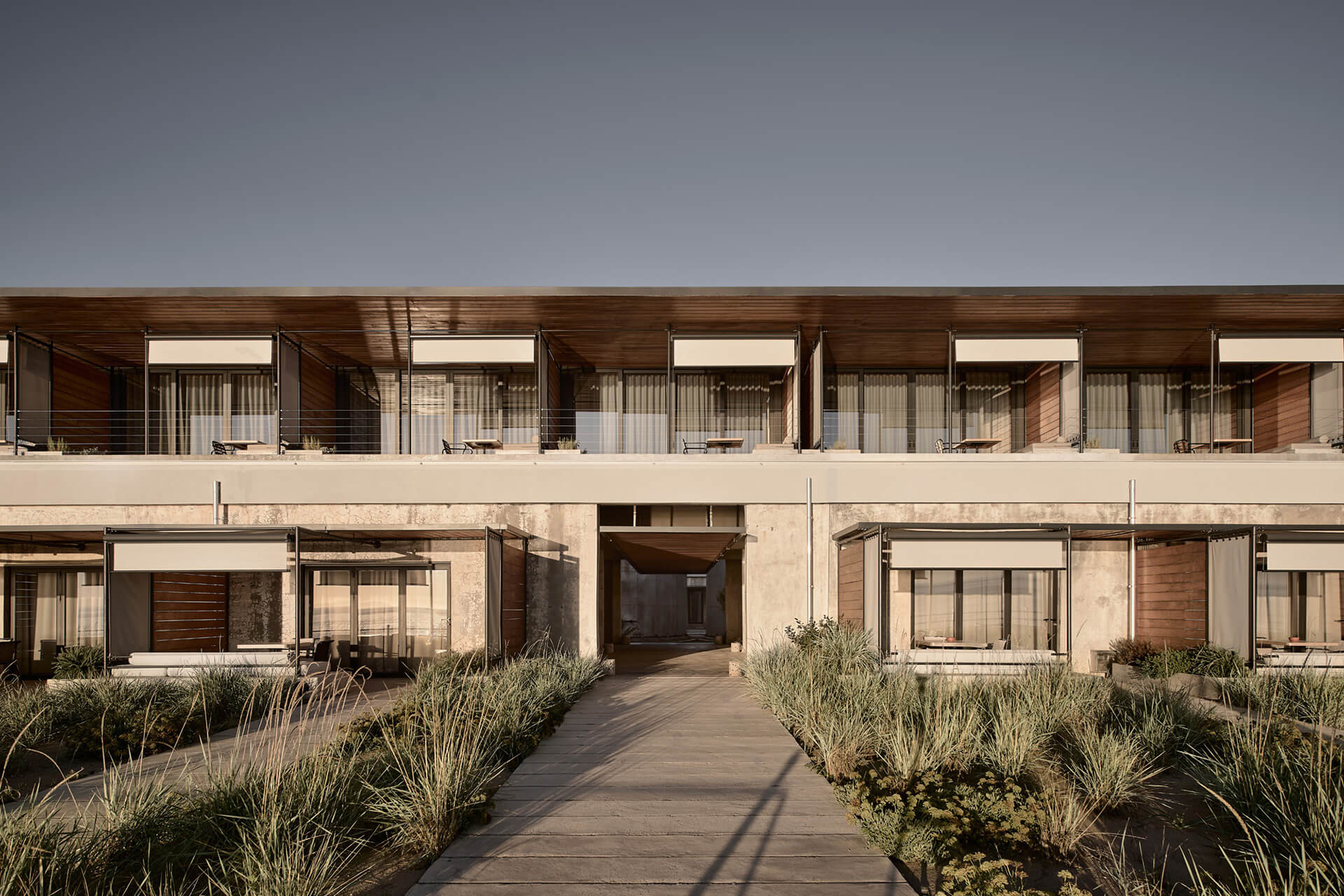
Kydoniatis Architects, based in Athens, is an architectural practice with a lineage spanning three generations. The office undertakes both small- and large-scale projects: fully integrated tourist resorts, residential complexes and private homes, apartment buildings and vacation houses, restorations and reconstructions, over 240 high-spec retail stores, office buildings, schools, pharmaceutical industries, and data centers.
Its design approach combines functionality and sustainability with respect for place, organizing complex programs with deep technical and construction knowledge. The practice is currently led by architect Konstantinos Kydoniatis, representing the younger generation, alongside his brother Phaedon.
S.M.: The office has extensive experience in designing integrated resorts based on the all inclusive model. How did this activity begin, and how have the relevant standards changed over the years? Does this typology have a sustainable future?
K.K.: We have repeatedly undertaken large-scale complexes, with capacities reaching 2,000 beds. However, I believe the term all inclusive remains misunderstood: historically it was associated with “cheap” tourism, whereas today it includes products of exceptionally high standards. There is a Greek hotel chain that operates exemplary all inclusive resorts with a notably high daily rate. The hotels we design—whether targeting couples or families, whether offering accommodation only or full service packages—strictly follow quality and organizational standards.
My personal involvement began early in my career at my father’s office. Twenty-five years ago, a family-run hotel company with three complexes in Cyprus commissioned us to support its first steps in Greece, on the island of Rhodes. Since then, the company has grown into a giant with over 45 resorts, and our collaboration continues. The experience of that period, combined with a stable relationship of trust, gave us a solid framework to deeply understand operational flows, renovation cycles, and strategies for differentiating the guest experience.
The persistent problem in Greece is the absence of an organized, coherent national tourism strategy. Policies rarely have continuity, infrastructure lags behind, and overall coordination is insufficient. While private initiative has significantly upgraded accommodations and services through competition, it cannot carry the entire burden. Many stakeholders act based on narrow self-interest, without a broader strategic vision. At key arrival and departure nodes, such as airports and ports, infrastructure is often inadequate, and transportation to and from them remains problematic – despite the fact that we are a tourism-driven country.
I believe Greece should – and can – address a wide range of visitors, from very high to mid-level spending. A critical priority is extending the tourist season, at least on the major islands (Rhodes, Crete, Corfu, Kos). New complexes must be designed from the outset for more than 6–7 months of operation, with sufficient indoor activity spaces and programmatic flexibility. Large resorts facilitate this transition, offering a rich mix of dining, leisure, wellness, and sports facilities, with clearly organized workflows and infrastructure.
Organized complexes serve families exceptionally well, with safe, distinct, high-quality spaces for all ages. Smaller accommodations, on the other hand, offer more specialized experiences with a strong following. The key requirement, regardless of scale, is adherence to standards and proper organization.
Unfortunately, a large portion of the supply remains unorganized. In terms of sustainability, the all inclusive model clearly has a future, provided it incorporates bioclimatic strategies, energy and water efficiency, circular material practices, adequate shading and natural ventilation, and infrastructure for year-round operation. This way, it ceases to be a “flattening” package and becomes a tool for the rational management of resources and experiences, with measurable benefits for the local area.
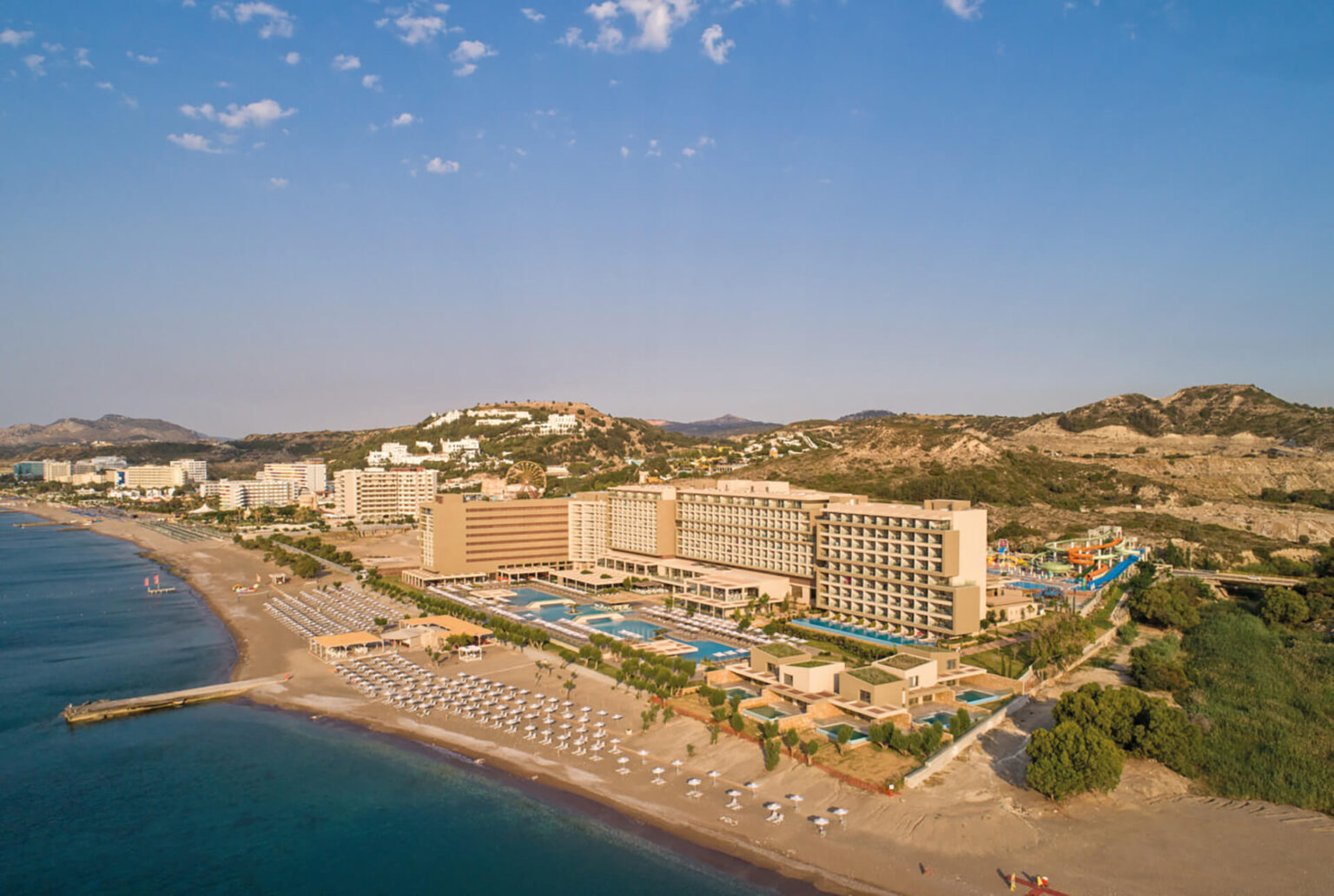
Through human scale and natural materials, the project proposes a contemporary understanding of luxury: simple, essential, and deeply intertwined with the environment and the lived experience of the landscape.Through human scale and natural materials, the project proposes a contemporary understanding of luxury: simple, essential, and deeply intertwined with the environment and the lived experience of the landscape.Through human scale and natural materials, the project proposes a contemporary understanding of luxury: simple, essential, and deeply intertwined with the environment and the lived experience of the landscape.
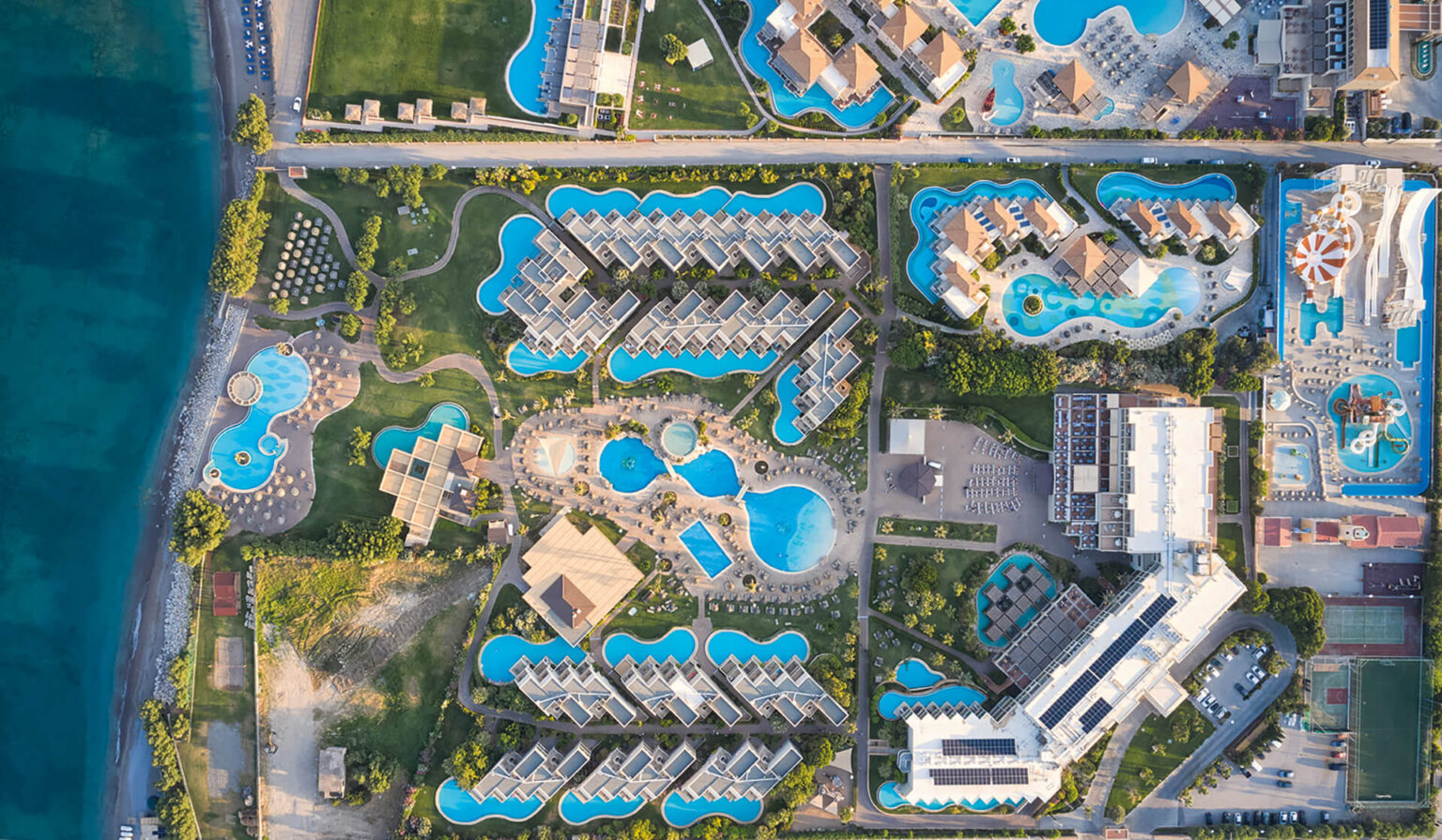
Through human scale and natural materials, the project proposes a contemporary understanding of luxury: simple, essential, and deeply intertwined with the environment and the lived experience of the landscape.Through human scale and natural materials, the project proposes a contemporary understanding of luxury: simple, essential, and deeply intertwined with the environment and the lived experience of the landscape.Through human scale and natural materials, the project proposes a contemporary understanding of luxury: simple, essential, and deeply intertwined with the environment and the lived experience of the landscape.